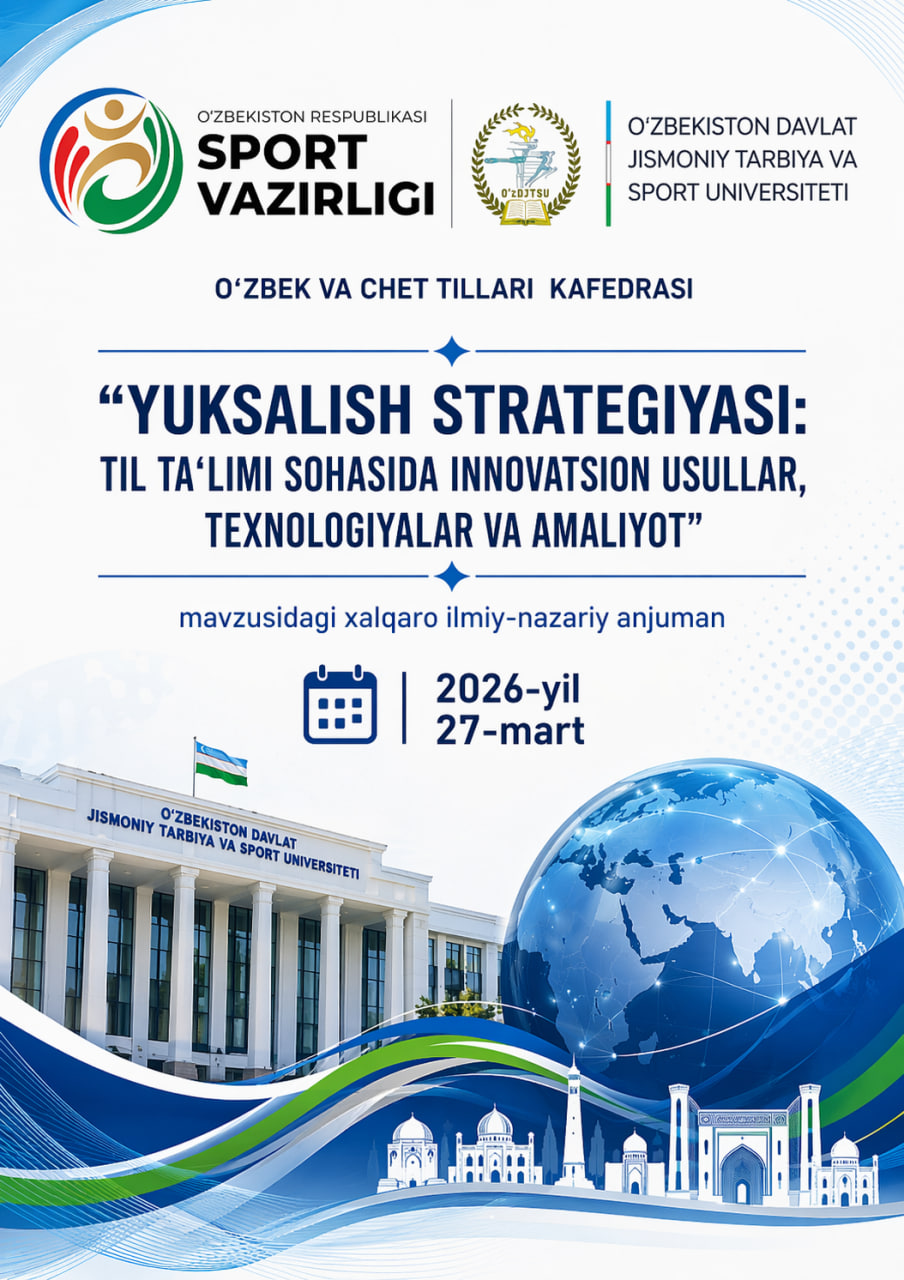
THE ROLE OF E-LEARNING IN MODERN FOREIGN LANGUAGE INSTRUCTION
Keywords:
digital pedagogy, learner autonomy, intercultural competence, synchronous and asynchronous learning, language acquisition technology, virtual exchange, blended learning, adaptive learning platformsAbstract
This article examines the critical role of e-learning in contemporary foreign language education. It argues that digital tools and platforms have fundamentally transformed pedagogical approaches, shifting the focus from teacher-centered instruction to learner-centered engagement. The discussion highlights how e-learning facilitates personalized learning pathways, enhances intercultural competence, and provides authentic communicative experiences, ultimately making language acquisition more accessible, effective, and sustainable.
References
Chapelle, C. A. (2016). Teaching English as a second language with computer technology. In E. Hinkel (Ed.), Handbook of research in second language teaching and learning (Vol. 3, pp. 417–432). Routledge.
Godwin-Jones, R. (2018). Second language writing online: An update. Language Learning & Technology, 22(1), 1–15.
Kukulska-Hulme, A., & Shield, L. (2008). An overview of mobile assisted language learning: From content delivery to supported collaboration and interaction. ReCALL, 20(3), 271–289.
O’Dowd, R. (2021). Virtual exchange: Moving forward into the next decade. Computer Assisted Language Learning, 34(3), 209–224.
Parmaxi, A. (2020). Virtual reality in language learning: A systematic review and implications for research and practice. Interactive Learning Environments, 31(1), 172–184.
Reinders, H., & White, C. (2016). Learner autonomy and new learning environments. Language Learning & Technology, 20(3), 1–7.
Thorne, S. L., & Reinhardt, J. (2008). “Bridging activities,” new media literacies, and advanced foreign language proficiency. CALICO Journal, 25(3), 558–572.