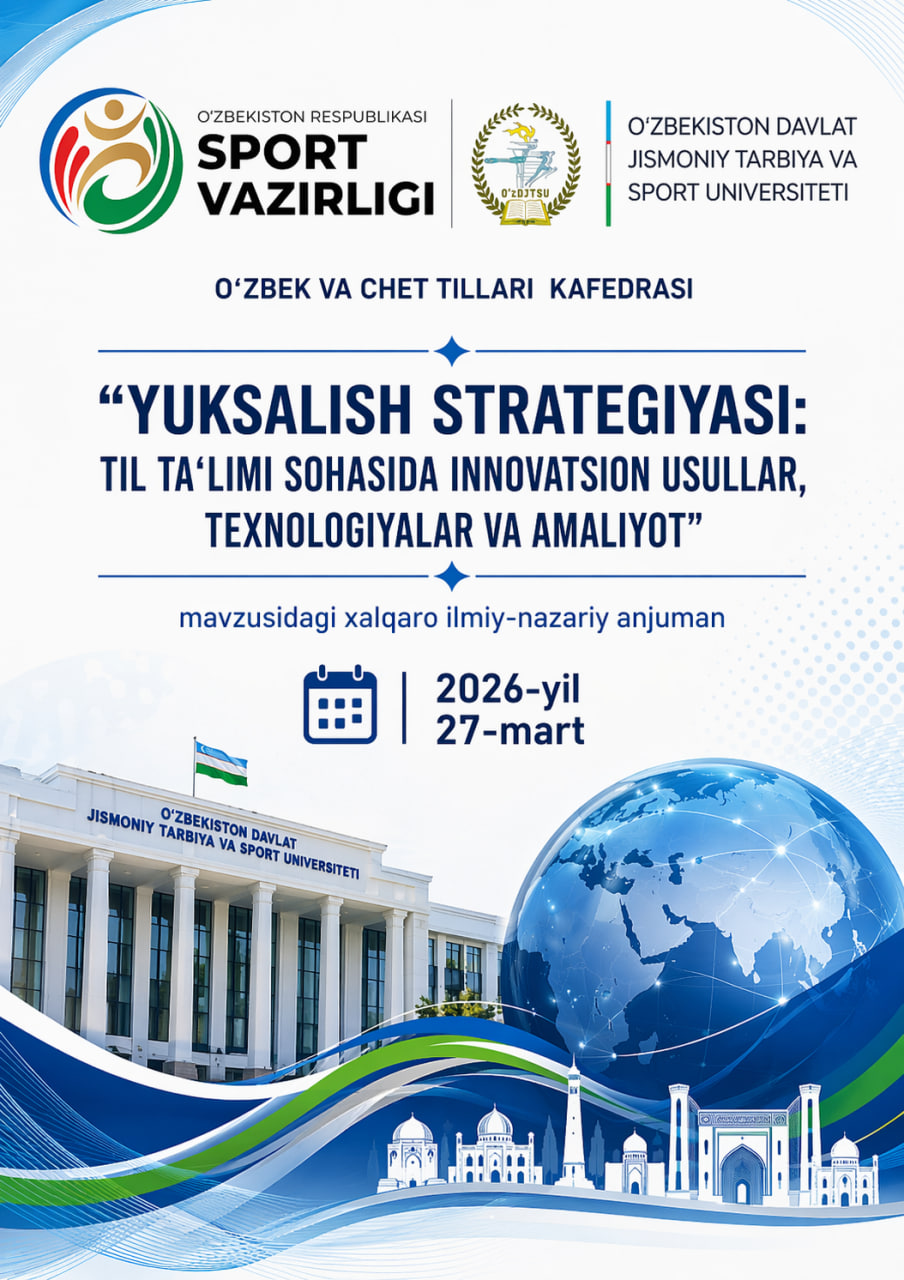
INNOVATIVE METHODS AND TECHNOLOGIES IN TEACHING SPEAKING
Keywords:
Speaking skills, language teaching, innovative methods, educational technology, communicative approach, artificial intelligence, gamification, virtual realityAbstract
The development of speaking skills is a central goal in language education, as it enables learners to communicate effectively in real-life situations. In recent years, innovative teaching methods and modern technologies have significantly enhanced the process of teaching speaking. This article examines key approaches such as communicative language teaching, task-based learning, and gamification, alongside technologies like artificial intelligence, mobile applications, and virtual reality. It highlights how these innovations improve learners’ fluency, confidence, and interaction skills while also addressing existing challenges.
References
Richards, J. C. (2008). Teaching Listening and Speaking: From Theory to Practice. Cambridge University Press.
Thornbury, S. (2005). How to Teach Speaking. Pearson Longman.
Harmer, J. (2007). How to Teach English. Pearson Education.
Brown, H. D. (2004). Language Assessment: Principles and Classroom Practices. Pearson Education.
Nunan, D. (2004). Task-Based Language Teaching. Cambridge University Press.
Dörnyei, Z. (2001). Motivational Strategies in the Language Classroom. Cambridge University Press.
Godwin-Jones, R. (2018). “Using Mobile Technology to Develop Speaking Skills.” Language Learning & Technology.
Kukulska-Hulme, A. (2020). Mobile Assisted Language Learning. Routledge.
McCarthy, M., & O’Keeffe, A. (2004). Research in the Teaching of Speaking. Annual Review of Applied Linguistics. Peterson, M. (2010). “Virtual Worlds in Language Learning.” Computer Assisted Language Learning.